VetCast · Digital signage
Screens that know who just walked in.
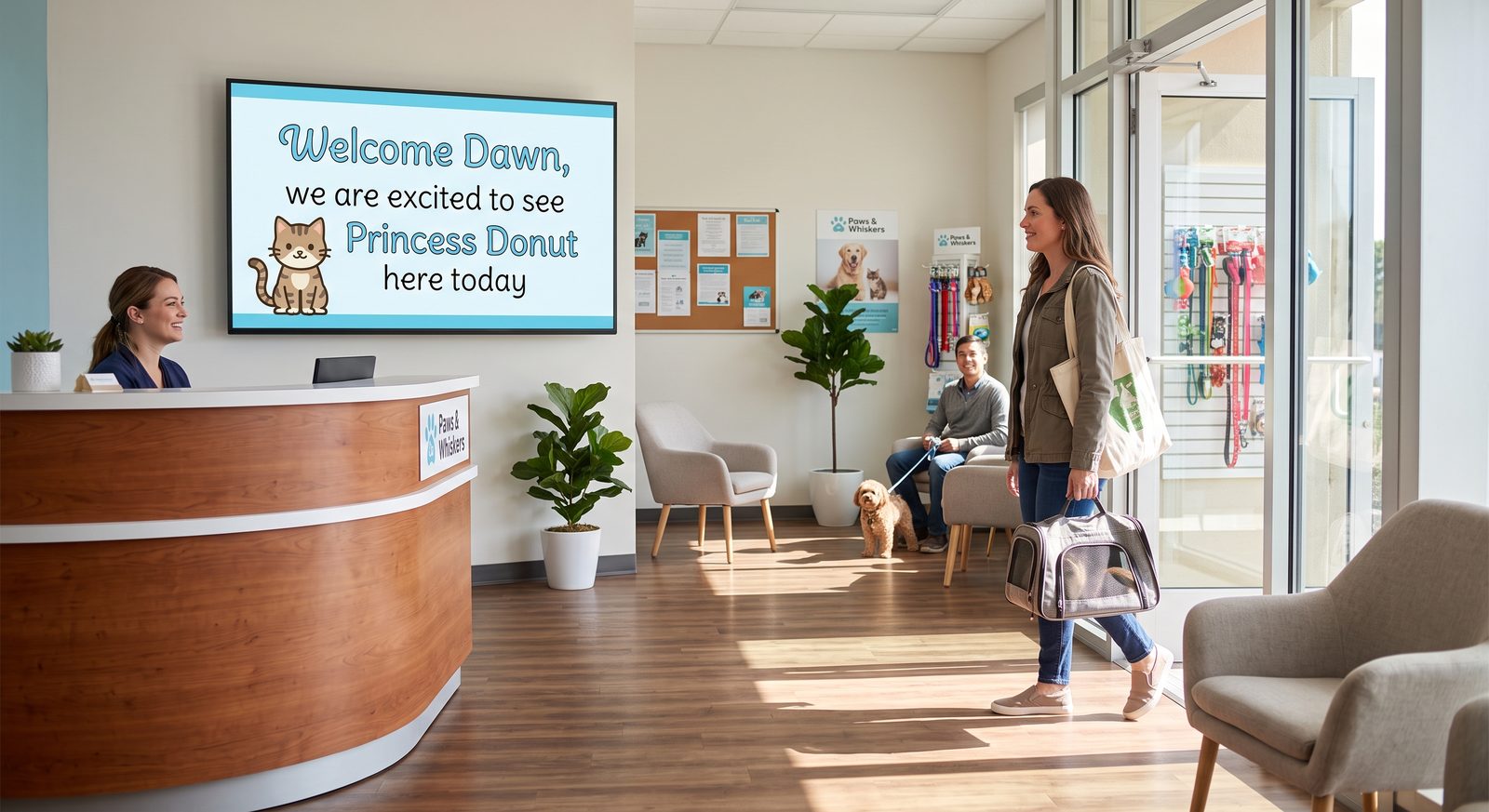
VetCast connects to your practice management system, so the lobby greets each patient by name, the exam room picks up where the lobby left off, and what plays in between is matched to why they came in.
How it works
The schedule you already keep, on the screens you already have
It reads your schedule
VetCast connects to the practice management system you already use. No new list to maintain, no second place to keep appointments up to date.
The lobby greets them
A patient is checked in and the lobby screen welcomes them by name, or with a photo their owner would recognise from across the room.
The exam room picks it up
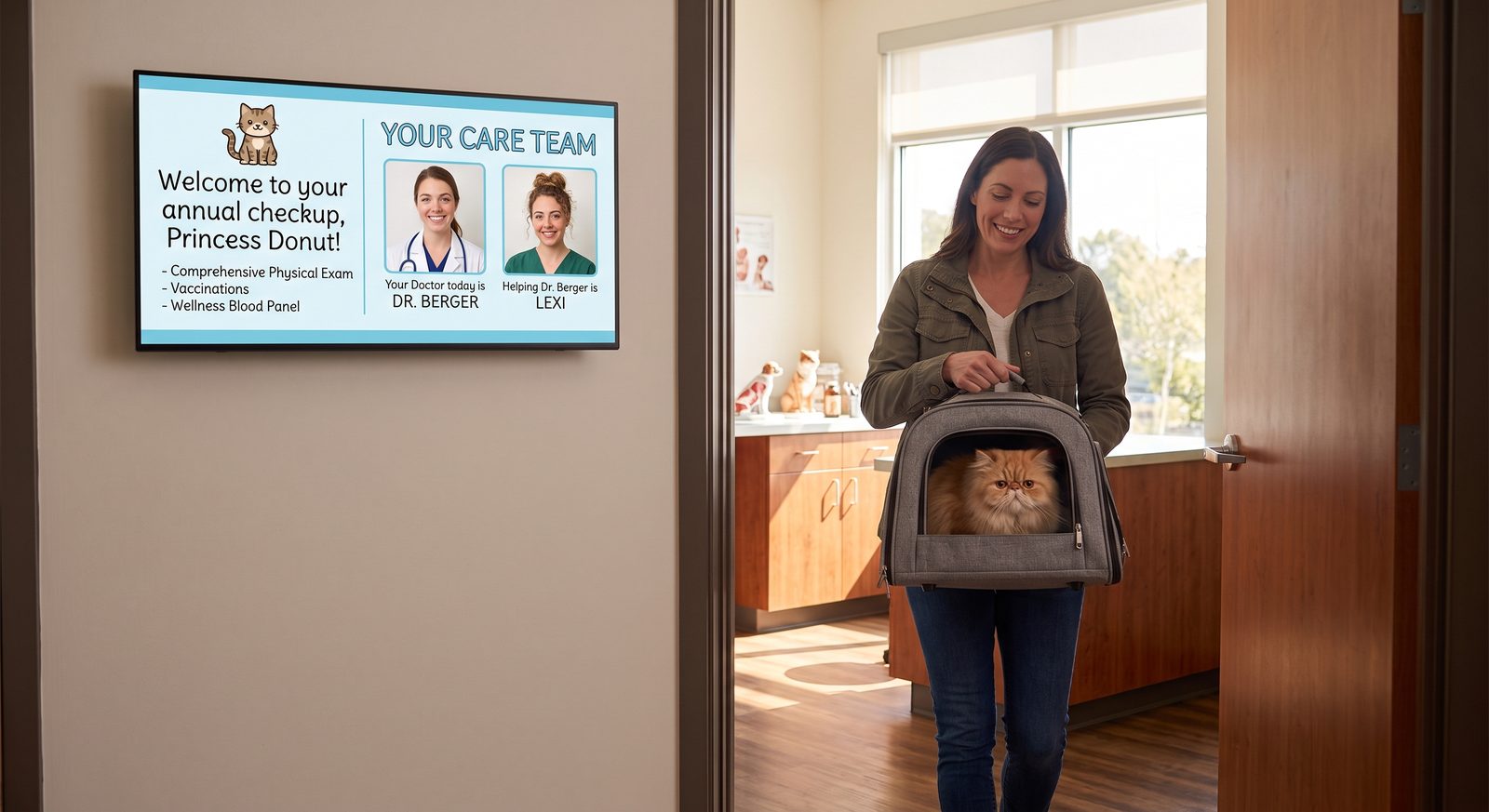
When they move to a room, the screen in that room welcomes them too. The experience follows the patient instead of restarting.
The content matches the visit
Because VetCast knows why they are here, it can show education about the tests and treatments your practice actually recommends for that visit.
Exam room
The room already knows why they are here
The greeting follows the patient in. Same name, same visit, picked up where the lobby left off rather than starting over on a screen that has been showing the same loop since April.
The plan for the visit is on screen while they wait. What you intend to do and why you recommend it, in writing, with a few quiet minutes to read it. So your client is already educated before you walk into the room.
And they know who is coming. The doctor and the assistant by name and by face, which turns a stranger in scrubs into someone they were already expecting.
A personalized experience for every patient
Greeted by name
Every patient gets their own welcome, in the lobby and again in the room. It reads as attention rather than automation.
Education that fits the visit
Owners arrive at the recommendation already understanding it, so the conversation starts further along than it would have.
Animals on screen between messages
Dogs, cats, lizards, whatever your clients like. Waiting in a room is dead time, and this is what makes it pass.
Your reviews, on the wall
The things clients have already said about you, in rotation, where the next client is sitting.
A QR code that collects more
Ask for the review at the moment the visit went well, on the screen in front of them, not in an email three days later.
Runs itself
Scheduled from the chart and refreshed on its own. Nobody on your team has to remember to update a screen.
Imaging
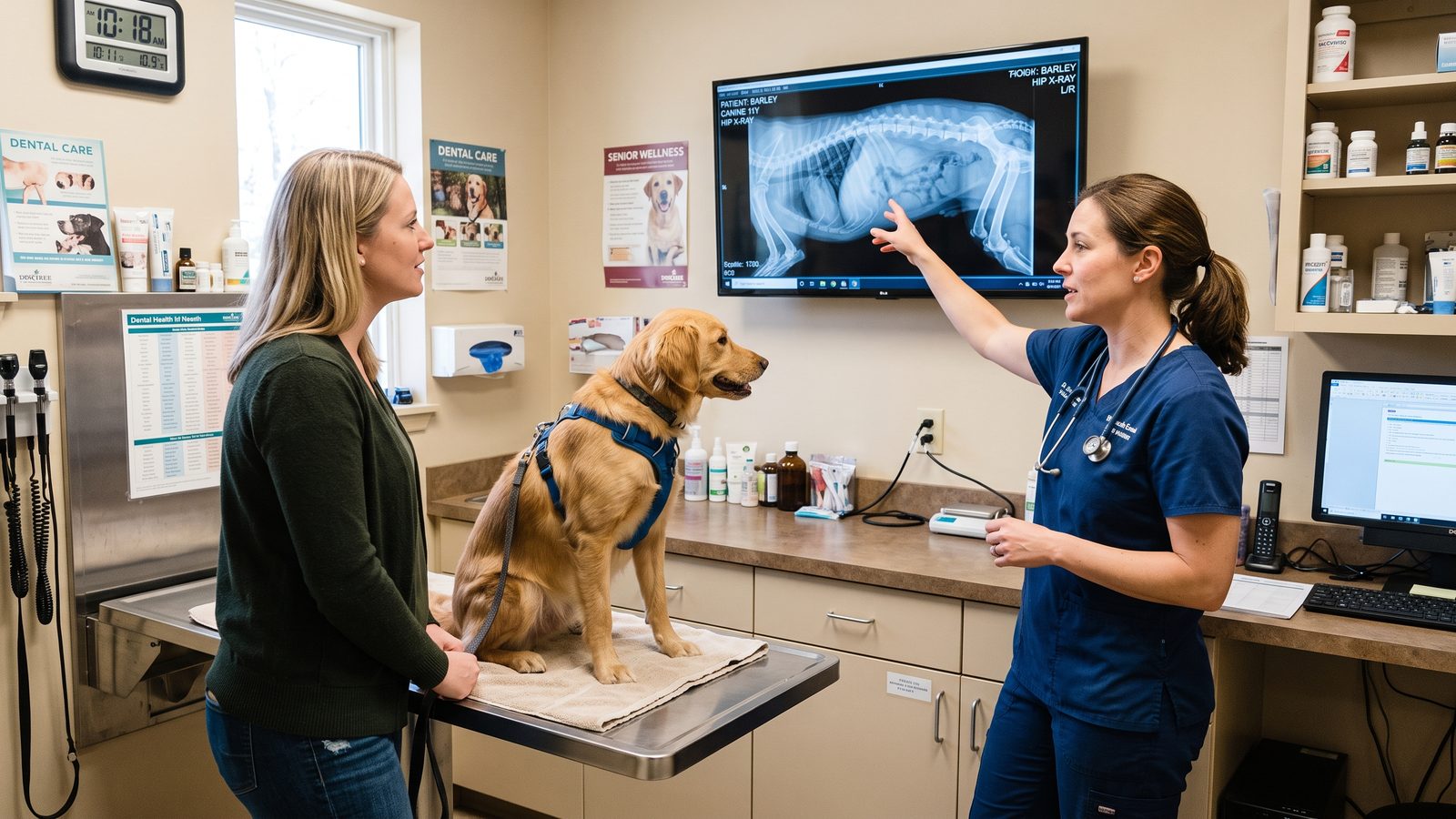
Put the x-ray on the wall, not on a laptop
Three people leaning over a thirteen-inch screen turned sideways is how most findings get explained. The owner sees a grey smudge, nods, and agrees to something they did not really see.
VetCast puts the study up on the screen that is already in the room, at a size everyone can actually read. You point at the thing you are talking about and the owner follows your finger to it. The conversation about what to do next starts from a place where they have seen the problem for themselves.
It pairs with VetView, where your studies already live.
Reviews
Ask while the visit is still going well
The best moment to ask for a review is in the room, right after the thing that earned it. VetCast puts your existing reviews in rotation where clients are already looking, and a QR code on screen turns a good visit into the next one.
"They knew his name before we got to the desk. Small thing, but it did not feel like a waiting room."
Scan to leave a review, on screen in the room.
Turn the wait into part of the visit
Tell us what you run your schedule on and we will show you how it looks.
Request a demo